There is a night, every year, when fire and water meet. It is not an ordinary night. It is the shortest night of the year, the one in which the sun reaches its zenith and the earth seems to hold its breath. For thousands of years, across all of Europe, that night has been celebrated with rituals that we now call “pagan,” but which are in truth nothing more than the recognition of an atavistic, necessary bond between human beings and the earth that hosts them. Bonfires lit to prolong the light, leaps over the flames as a gesture of purification and courage, flower crowns worn by women to symbolize the fullness of the solar circle, immersions in rivers, lakes, or the sea to wash away impurities and regenerate. There was no superstition in those gestures—or at least not only superstition. There was an ancient knowledge: that fire burns, water purifies, earth nourishes, and air breathes, and that humanity is made of the same substances as the world that surrounds it.
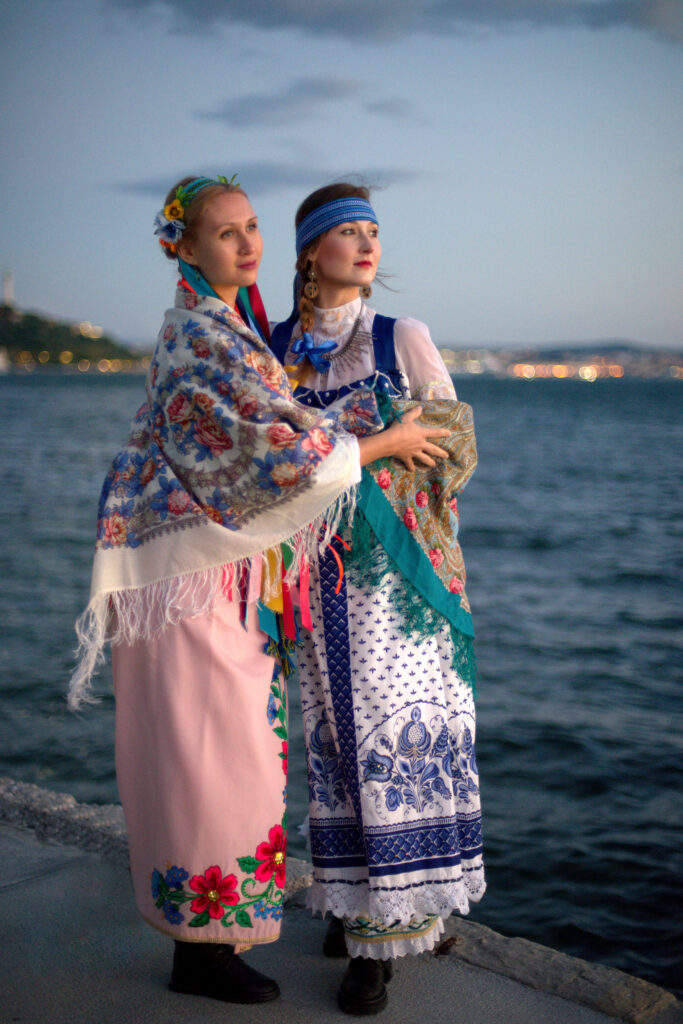
Then Christianity arrived. And those celebrations, which required no permission from any god to exist, became uncomfortable. They were labeled as “pagan,” pushed to the margins, sometimes persecuted. One could no longer speak openly of the Festival of the Solstice, on pain of being accused of idolatry or worse. But the need to celebrate the cycle of the seasons, to honor the moment when the earth is most generous, was stronger than any prohibition. Thus, in many parts of Europe, the ancient rites found a way to survive. They disguised themselves, changed names, adapted to the new language without renouncing their substance. And one of the most ingenious solutions was the one devised by the Slavic peoples of Eastern Europe. To bypass the obstacle, they called the ritual of the solstice bath “the bath of Saint John.” In their language, Ivana Kupala. A name that combined the figure of the Baptist with the ancient Slavic root kupati, meaning “to immerse,” “to bathe.” A perfect compromise: the Church could recognize the saint, the people could continue to celebrate the rite. The festival survived, and still survives today, in Ukraine, Russia, Belarus, Poland, and Lithuania. Bonfires, flower wreaths thrown into rivers to foretell destiny, dances around the fire, songs that speak of love and death, of light and darkness. Rituals that have never been “pagan” in the derogatory sense of the term, but that respond to something deeper: the human need to recognize oneself as part of a greater whole, to synchronize with the breath of the earth, to celebrate life that is reborn even when everything around seems intent on extinguishing it.
And today, in an era of conflicts and divisions, that ancestral rite speaks again with a voice that is both ancient and urgently contemporary. On Sunday, July 5, 2026, in Trieste, in Piazza Verdi, the Cultural Association Rodnik has organized an event dedicated to the ancient Slavic festival of Ivana Kupala. It is not a folkloric reenactment, not a tourist attraction. It is something much greater. Rodnik—a word that in Russian means “spring,” “source”—is an association founded in Trieste in 2009, composed of Ukrainians, Russians, Serbs, and Italians. People who, regardless of nationality, have chosen to consider themselves “friends-brothers,” and who in recent years have provided concrete help to those who have fled the war, both Ukrainians and Russians. At a historical moment when borders have become sharper, when the words “Ukrainian” and “Russian” seem destined to stand on opposing fronts, Rodnik has chosen to do the exact opposite. It has chosen to remember that roots are deeper than conflicts, that culture is more resilient than weapons, and that music can still be a total language, capable of uniting what politics has divided.
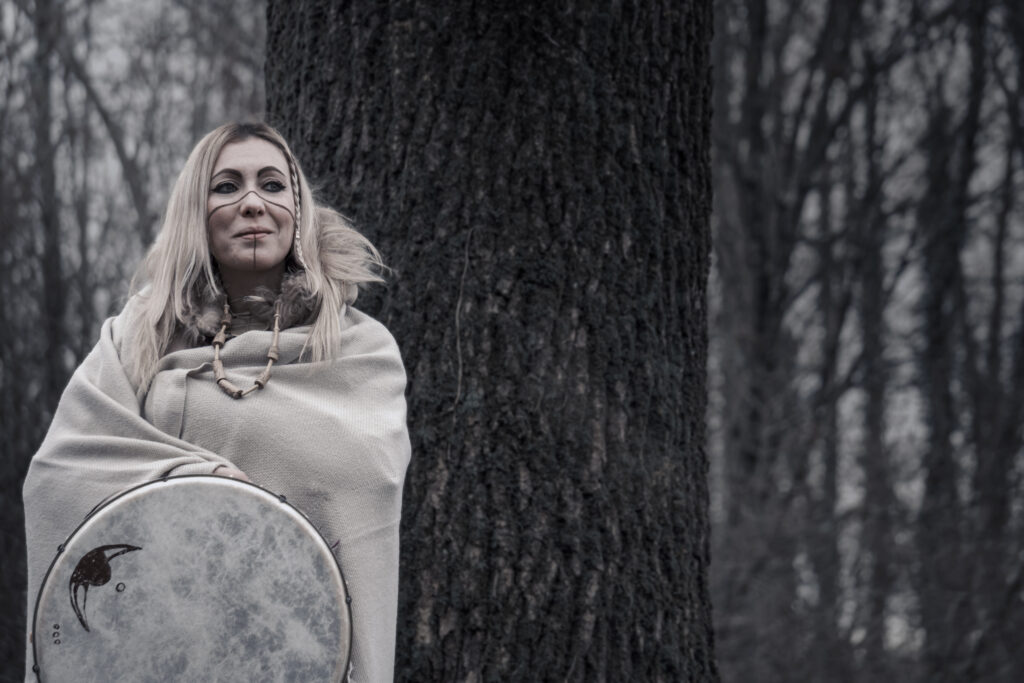
At the heart of this celebration, a gesture of immense symbolic value. Denise Cannas, founder and singer of the band Uttern, will sing for peace. She will do so in traditional garments, like an ancient priestess bringing back to life the rites of the Mother Goddess. And she will do so at a time of year that is particularly significant for ancient traditions, that summer solstice which the Slavs call Ivana Kupala and which throughout the Mediterranean is celebrated as the night of St. John. Denise’s song will not be just a musical performance. It will be an act of communion. A bridge cast between cultures that war would like to keep separate, between peoples who share the same roots and the same need for peace.
The choice of Denise Cannas as the voice of this message is not accidental. Uttern—the name means “otter,” an animal that in many ancient cultures represents the feminine divine energy—is a group that has always moved along a subtle ridge between music, spirituality, and identity research. Their sound draws on the pagan traditions of ancient Europe, shamanic rites, Celtic music, and archaic vocality. It is not a folkloric revival, but an attempt to reconnect the audience to what Denise calls “the ancient, thousand-year-old spirituality of pagan Europe.” And in this attempt, Denise’s voice becomes something more than a simple interpretation: it becomes a vehicle for an energy that is both individual and collective, intimate and universal.
And so, on Sunday, July 5, Piazza Verdi in Trieste will transform for one night into a place out of time. There will be traditional songs and dances, circles around the symbolic fire, the release of flower garlands into the water to foretell the future. There will be the forces of nature—fire, water, earth, air—speaking again through people. And there will be that song of peace, intoned by Denise Cannas, resounding like a spiritual blessing for all peoples, and in particular as a powerful wish for the end of war.
The event is free and open to all. It is not a political rally, not a demonstration. It is an invitation to remember our roots, to recognize that music is the most ancient language we have, and that its power has never been merely aesthetic. It is a power of connection, of healing, of resistance. A power that, in an age of fragmentation, might be the only lifeline we have left.
Because the truth, perhaps, is this: wars pass, borders shift, ideologies fade. But the solstice returns every year. And every year, somewhere, someone lights a fire, weaves a flower crown, immerses themselves in the water, and sings. Not to challenge power, not to deny history. But to remember that we are made of the same earth we walk upon, that life itself always renews itself, and that music—true music, the kind that comes before words—can still save us.
Happy Ivana Kupala to all. May the fire purify, may the water wash away hatred, and may Denise’s song, on that solstice night, reach where it needs to reach.
Bruno Giraldo
Contatti:
Associazione Rodnik https://www.facebook.com/p/Associazione-folkloristica-rodnik-100063697354077/
Denise Cannas https://www.facebook.com/denise.cannas
Uttern https://utternofficial.com/
BROWSE FOR FREE BRIOMAGAZINE, OUR ONLINE MONTHLY MAGAZINE PACKED WITH NEWS FROM THE UNDERGROUND WORLD: https://www.magcloud.com/browse/magazine/3163084
You can support us by purchasing the PDF version of BrioMagazine for just $1
Before you leave, follow our Spotify playlist and subscribe to the newsletter to remain constantly updated on BrioMediaGroup’s daily news: it’s free for you, but it makes a difference for us and helps us grow!
Follow the BrioMediaGroup channel on WhatsApp: https://whatsapp.com/channel/0029Vb7WbpT8aKvAq24uyt2x
For inquiries and press releases: brioradioweb@gmail.com